Rule-Based
Synthetic Data
Generate synthetic data to mimic real-world or targeted scenarios using predefined rules and constraints
Key benefits of using Rule-Based Synthetic Data
User documentation
Explore the Omni user documentation
Discover our features
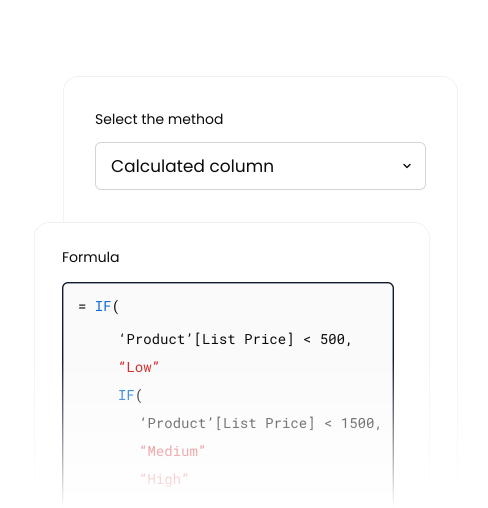
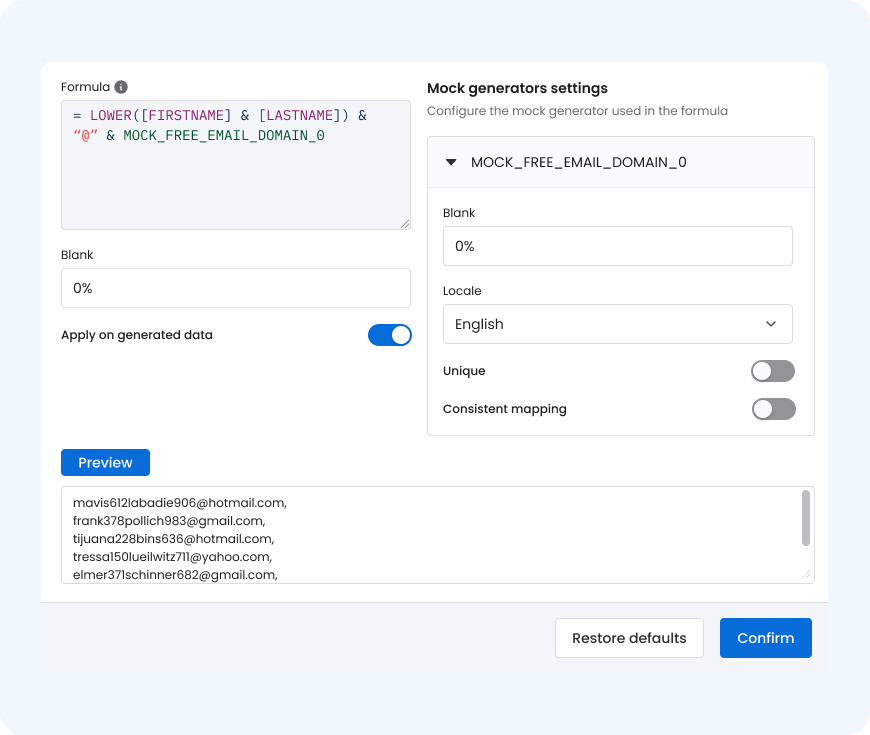
Formula-Based Synthetic Data Generation
Generate Synthetic Data according to defined formulas
Synthetic data can be tailored to match specific business rules, simulate rare or edge case scenarios, and enrich datasets by generating data based on formulas. This enables new data generation and edge case generation based on formulas.
Pattern-Based Synthetic Data Generation
Generate Synthetic Data according to patterns
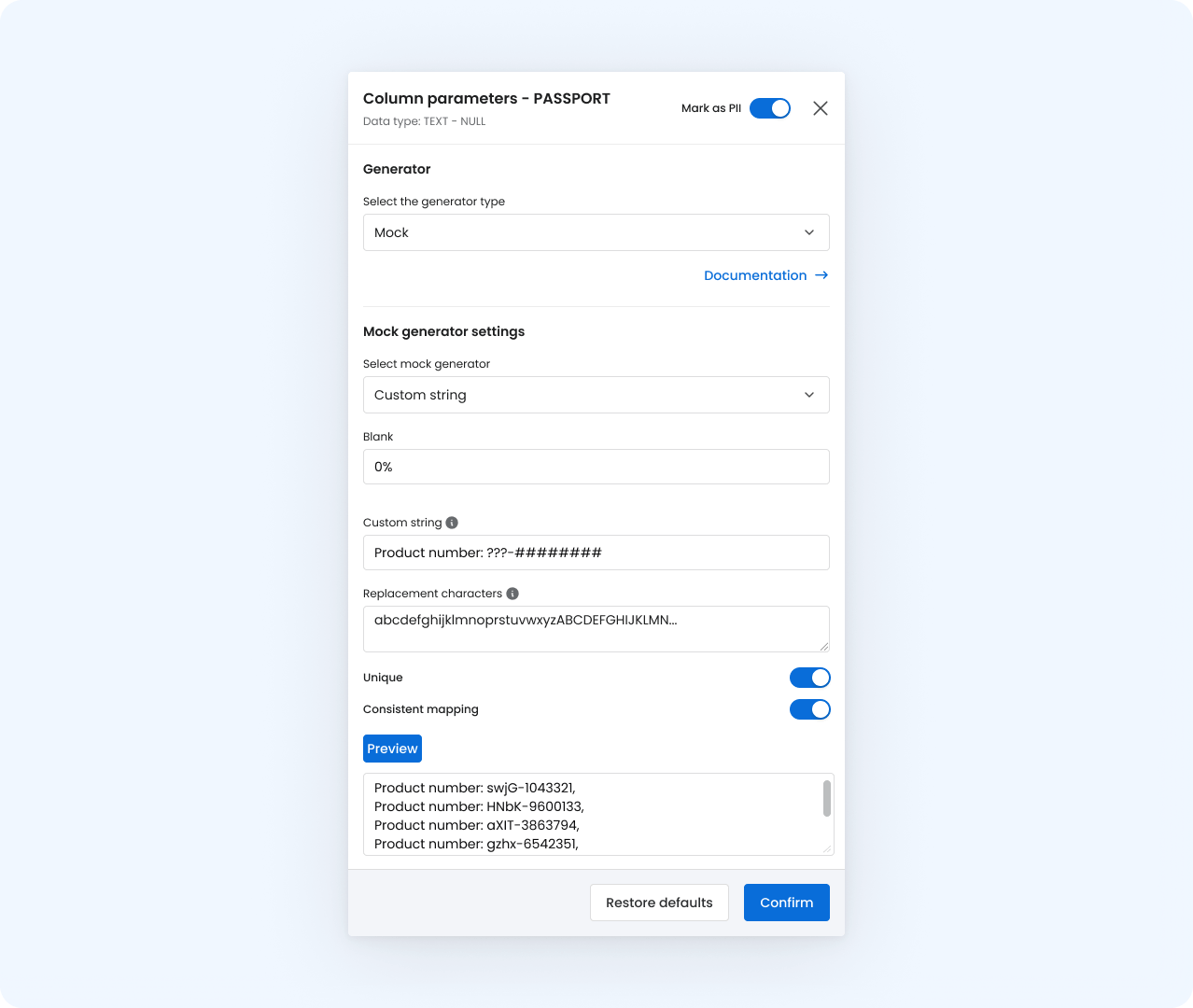
Pattern-based synthetic data enables organizations to generate hypothetical future scenarios, data that follows patterns and simulate rare or future events.
Subsetting
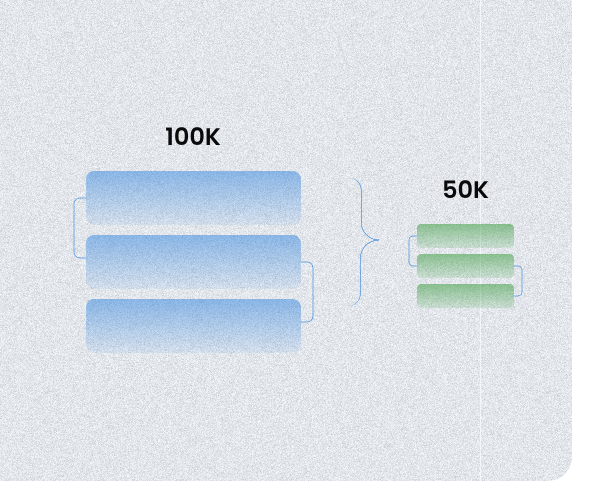
Create manageable data subsets
Reduce records to create a smaller, representative subset of a relational database while maintaining referential integrity.
Why Rule-Based Synthetic Data is more advanced
Data Cleaning and Transformation
Effortlessly clean and reformat data, such as trimming whitespace, changing text casing, or converting date formats.
Statistical Calculations
Perform row-level calculations using logical, mathematical, or conditional formulas to transform data at a granular level.
Logical Operations
Apply logical tests to data to create flags, indicators, or to filter and categorize data based on specific criteria.
Mathematical Operations
Perform row-level mathematical transformations, such as applying formulas for adjustments, scaling, or rounding.
Text and Date Manipulation
Transform text and date fields with functions like trimming, formatting, or extracting parts of a date or text field.
Data simulation
Generate data using predefined generators, enabling customization by applying specific distributions such as uniform or normal.
Rule-Based Synthetic Data
Advanced Analytics
Unlock data-driven innovation with Omni's AI-generated synthetic data, providing fast, compliant access to high-quality datasets for analytics.
Fast Data Sharing
Overcome data sharing challenges with Omni's synthetic data solutions, enabling secure, compliant, and efficient data exchange across teams.
Synthetic Data for Pilots and Innovation
Explore fast prototyping and hypothesis validation before real data request performance.
Real data problematic?
Turn to synthetic data!
Explore with us how to create data that mimics real data,
safely and efficiently, using synthetic data